Triathlon coach shares expert tips for running safely in the snow
Don't let a fall of snow stop you running – here's coach Mark Kleanthous with his expert advice...


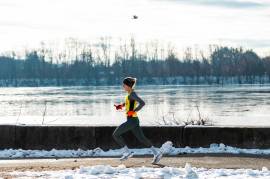
I once completed a triple-iron distance triathlon in the snow. It’s easier than it looks, but also harder. Snow running requires a specific technique, along with the correct gear and training. Luckily, expert triathlon coach and author Mark Kleanthous knows exactly what it takes to run safely and successfully in the snow.
Snow may be falling, but don’t let this stop you from losing fitness. For one thing, it can add variety to your training plan. And for another, it can allow you to discover spectacular vistas as your usual run routes become a winter wonderland.
Here are my top tips as a triathlon coach for running when there is snow on the ground…
Imagine you’re running across tyres (stepping into each tyre). Push off from the toes upwards and forwards, as this reduces the chances of slipping.
Run with your thighs, not your calf muscles, so if you need to react and regain your balance your lower legs will be less fatigued and more able to react.
Running in the snow is demanding and strenuous, like running on soft sand. Each time a foot lands, it presses down, so extra energy is used up to allow us to lift the leg and propel us forward.

If you’re using a pedometer, expect to take up to 20 more strides a minute to cover the same ground (this all depends on the depth of snow, going up or down hill, and your running style).
Running in the snow can be a great workout because each time you land in deep snow you have to work harder than normal.
This is far better run strength specific training than hitting the gym. Using your arms for balance will also help with knee lift out of the snow.
Have a relaxed upper body and swing your arms smoothly back and forwards to allow correct push off. Being tense when you come across slippery white snow/ice will end in you slipping over.
The best run equipment for snow
First off, off-road running shoes for grip are essential. If you have to use road shoes, take shorter steps to and keep moving to avoid slipping and realise that your shoes are going to get quickly caked in snow, so avoid mesh on the front as this allows the snow to get in.

Don’t use cotton running socks because as soon as they’re wet your feet will stay cold. Choose a dri-fit or outdoor wicking style, there are even some waterproof socks like SealSkinz – if you don’t like their texture, wear a thin pair underneath. I often carry an extra pair of dry socks that you can change into.
Use polarized or tinted running sunglasses. Also clear lenses may be needed in a snow blizzard. We can lose up to 40% of the heat from our head and 10% from our hands, so you must cover the skin to keep the skin warm and prevent frostbite and chapping.
A thermal hat with fleece lining or a skull cap with a Gore Windstopper layer on the outside is essential. Run gloves are also essential to keep your hands warm, but avoid the types that make your hands sweaty as this can soon chill your fingers.
Wear several layers on your body, the outer layer should be a waterproof running jacket or, at the very least, windproof. A zip helps, should you get too warm, and some tops have armpit zips to allow extra ventilation.
Your legs will be working harder than normal so you should only need one layer on your legs. Carry a few sizes of plasters due to running differently – it’s not uncommon for skin to rub as you continually lift each foot out of the snow.
Carry your mobile phone and an energy gel or sports bar just in case. Leave a message where you’ve gone and your planned route and don’t deviate, no matter how tempted you might be.
Injury prevention tips

When running in snow, land on the mid foot then with the heel. Landing on the heel on slippery icy snow is an accident waiting to happen, as it’s a matter of when not if your heel will slip forward.
North facing hills can be more treacherous and icy. Along some roads the conditions of the pavement can be completely different on opposite sides of the road. Plus, north facing pavement can be dangerous while the south facing pavement can be safer to run on.
Train at the warmest part of the day. Temperatures plummet at night so don’t venture too far from home. Run multiple laps and you’ll soon discover that what was once crunchy is now like an ice rink.
Use your eyes to constantly look ahead then in front of you for slippery spots and exposed obstructions. When planning a run session in snow reduce the time in training by 25% because running in the snow is demanding on muscles joints and ligaments.
Don’t stay in wet clothes in cold conditions as this will lower your body temperature and make you more vulnerable to illness. Cold air can cause an asthma attack or chest pain.
If in doubt, seek out your doctor to check for any medical conditions that may prevent you from exercising outside.
‘What-if’ sessions
A ‘what-if’ session should be a safe alternative workout:
Off-road mountain biking – MTB workouts can use up to 25% more calories per hour, so a planned 100-minute road ride can be substituted for a 75-minute mountain bike ride.
Don’t underestimate a long walk in the snow – it’s a great fat-burning stamina workout, especially for people who find it hard to keep your heart rate below 70% when training. If you’re unable to bike and run, then use all that extra energy and go swimming.
Have a good leg workout instead with some swimming drills, use a swim kick board, and complete lots of kicking interspersed with swimming, and ditch that pull buoy for a change.
Improve your core fitness – improve your core for triathlon training and racing, I like using a Swiss ball.
Don’t forget the good old-fashioned home workout – press-ups, sits up, lay on your back leg raises, walking up and down stairs, and squat thrusts.
Fore more strength training for triathletes, check out our 8-week winter base strength training plan.


 Mark Kleanthous
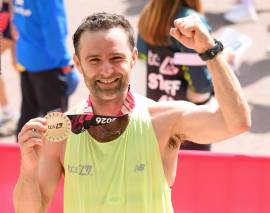
Mark is an athlete and coach, with 500+ triathlon finishes to his name. He's also the author of 'The Complete Book of Triathlon Training'.
Mark Kleanthous
Mark is an athlete and coach, with 500+ triathlon finishes to his name. He's also the author of 'The Complete Book of Triathlon Training'.